
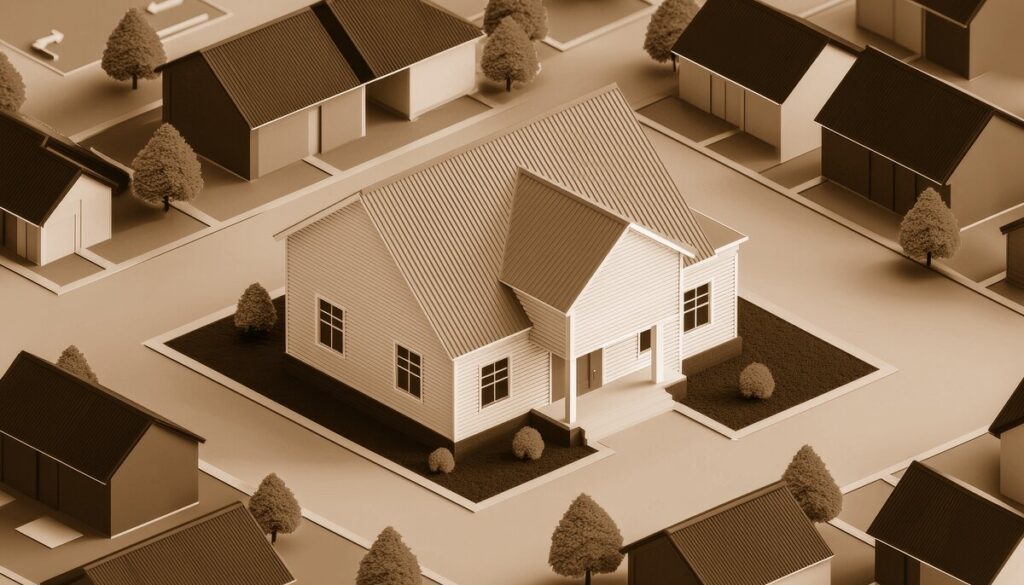
A Neighborhood with Deep Roots
Southern Gables is easy to recognize today: a welcoming south Lakewood neighborhood of ranch-style homes, mature trees, schoolyards, wide streets, and mountain-bright Colorado skies. Its boundaries are generally described as South Wadsworth Boulevard on the east, Garrison Street on the west, West Jewell Avenue on the north, and Morrison Road on the south. Within that rectangle are streets such as Yarrow, Ammons, Wadsworth, Evans, and Woodard Drive—names that reflect both the neighborhood’s postwar growth and its older rural history. ([southerngablesneighborhoodassociation.com](https://southerngablesneighborhoodassociation.com/about/?utm_source=openai))
What makes Southern Gables special is that it feels established without feeling frozen in time. Families who arrived when the first houses were being built in the 1960s still live near newer residents, and the neighborhood’s identity has always depended as much on neighborly cooperation as on its physical boundaries.
Before Southern Gables: Farms, Open Land, and the “Montana District”
Long before Southern Gables became a subdivision, this part of Jefferson County was open country. Local histories describe the area as the “Montana district,” a landscape shaped by Indigenous peoples, early explorers, homesteaders, ranchers, and agricultural families. One early recorded land transaction involved William and Joseph Hodgson, who acquired property in 1859 from Captain Arago, a veteran of the Navajo Indian wars who had received the land through a military grant. ([southerngablesneighborhoodassociation.com](https://southerngablesneighborhoodassociation.com/footsteps-1/?utm_source=openai))
For decades, the land west of what became Wadsworth Boulevard remained largely rural. Dairies, farms, orchards, and large homesteads were common throughout the Lakewood area. As Denver expanded westward and the Federal Center brought jobs and workers after World War II, open acreage gradually gave way to residential development.
That transition is still visible in a few surviving historic traces. In the northwestern part of Southern Gables, a photography studio in the 9000 block of Jewell Avenue occupies buildings dating to 1892. Nearby, Woodard Drive preserves the name of Edna Woodard, who owned the property beginning in the 1920s and lived there for decades. These remnants offer a reminder that the neighborhood’s story did not begin with the first model home. ([southerngablesneighborhoodassociation.com](https://southerngablesneighborhoodassociation.com/footsteps-3/?utm_source=openai))
How Southern Gables Got Its Name
The modern neighborhood began taking shape in the early 1960s. The first filing for home construction was recorded on April 8, 1963, according to the Southern Gables Neighborhood Association. A few years later, Wood Brothers began building homes on what was then raw, vacant land west of Wadsworth Boulevard. The development was marketed as Southern Gables. ([southerngablesneighborhoodassociation.com](https://southerngablesneighborhoodassociation.com/wp-content/uploads/2019/04/Spring-2019-newsletter-1.pdf?utm_source=openai))
The name appears to have been connected to the broader “Gables” identity already familiar in the area, including the nearby Green Gables schools and historic Green Gables Country Club. “Southern Gables” distinguished the new residential tract from other Gables-related places farther north and gave the development a warm, established-sounding identity at a time when builders were transforming former agricultural land into family neighborhoods.
Many of the original homes were modest, practical ranch houses designed for the postwar middle class. One early resident, Harry Puncec, recalled purchasing a Wood Brothers Vicksburg model on South Yarrow in 1967 for $18,400. Young families, veterans, and workers employed at places such as the Denver Federal Center found Southern Gables appealing because it offered new homes, convenient commutes, and room for children to grow. ([southerngablesneighborhoodassociation.com](https://southerngablesneighborhoodassociation.com/meet-the-puncecs/?utm_source=openai))
The Neighborhood Takes Shape
By the summer of 1967, the first wave of families was moving in. Streets filled with construction trucks, bicycles, young parents, and children exploring a neighborhood that seemed to appear almost overnight. Green Gables Elementary School was being completed nearby, quickly becoming one of the community’s central institutions.
Southern Gables was also born during an important moment in Lakewood’s civic history. In 1969, the formerly unincorporated community voted to become the City of Lakewood. That change gave residents a new municipal identity while preserving the strong, individual character of neighborhoods such as Southern Gables. ([southerngablesneighborhoodassociation.com](https://southerngablesneighborhoodassociation.com/meet-the-puncecs/?utm_source=openai))
The original school pattern remains familiar to many longtime families:
- Green Gables Elementary School in the heart of the neighborhood
- Carmody Middle School just west of Southern Gables
- Bear Creek High School near Kipling Parkway and Dartmouth Avenue
During the 1970s, Green Gables became so popular and heavily enrolled that the school experimented with a year-round calendar, dividing students into Tracks A, B, and C. It was an unusual solution to a very ordinary suburban problem: too many neighborhood children for the available classrooms. ([southerngablesneighborhoodassociation.com](https://southerngablesneighborhoodassociation.com/meet-the-puncecs/?utm_source=openai))
The Chevrolet Dealership and a Lesson in Community Organizing
One of Southern Gables’ most important milestones came in the early 1970s, when Luby Chevrolet proposed purchasing land near South Wadsworth Boulevard and West Evans Avenue. Residents worried that a dealership would bring excessive lighting, traffic, noise, and parking problems into the neighborhood.
Rather than simply oppose the project, neighbors organized and worked with the City of Lakewood to create a planned unit development. Their agreement addressed concerns such as indirect lighting, parking restrictions along Evans Avenue, and a landscaped berm separating the dealership from nearby homes. The dealership eventually became a long-term business neighbor, first under Luby Chevrolet and later as Emich Chevrolet. ([southerngablesneighborhoodassociation.com](https://southerngablesneighborhoodassociation.com/wp-content/uploads/2019/04/Spring-2019-newsletter-1.pdf?utm_source=openai))
That episode helped inspire the creation of formal neighborhood leadership. The Southern Gables HOA’s bylaws were written in March 1973, while the voluntary Southern Gables Neighborhood Association was formed in 1983. Today, the neighborhood association emphasizes communication, events, stewardship, and cooperation rather than enforcing property covenants. ([southerngablesneighborhoodassociation.com](https://southerngablesneighborhoodassociation.com/wp-content/uploads/2019/04/Spring-2019-newsletter-1.pdf?utm_source=openai))
Landmarks of Everyday Life
Southern Gables does not rely on a single grand monument to tell its story. Its landmarks are the familiar places that have shaped daily life over generations.
Green Gables Elementary remains the neighborhood’s most recognizable civic anchor. Its playgrounds and classrooms have served multiple generations of Lakewood children. Carmody Middle School, nearby churches, local businesses along Wadsworth, and the network of sidewalks and residential streets also contribute to the neighborhood’s sense of place.
The area around West Jewell Avenue provides another link to the past, where older buildings and historic properties recall the agricultural landscape that preceded the subdivision. At the neighborhood’s edges, Morrison Road connects Southern Gables to the larger south Lakewood community, while Wadsworth remains a major commercial and transportation corridor.
Residents also enjoy access to nearby parks, trails, open spaces, and the broader Bear Creek corridor. Although Southern Gables is primarily residential, its location places it close to Lakewood’s parks and recreation network, including larger natural areas south and west of the neighborhood.
Southern Gables Today
Over the decades, Southern Gables has evolved without losing its original character. The young families of the 1960s became grandparents. Original ranch homes have been remodeled, landscaped, and expanded. Some houses have changed hands many times, while others remain occupied by first owners or their descendants.
The neighborhood is more diverse in age and background than it was at its beginning, yet the traditions of cooperation remain strong. Neighbors organize seasonal activities, support schools, encourage sustainable gardening, and look after one another during Colorado snowstorms and summer emergencies. The community garden and sustainability efforts are modern expressions of an older Southern Gables habit: working together to make the neighborhood better. ([southerngablesneighborhoodassociation.com](https://southerngablesneighborhoodassociation.com/wp-content/uploads/2019/04/Spring-2019-newsletter-1.pdf?utm_source=openai))
That may be Southern Gables’ greatest historical legacy. It was built as a postwar subdivision, but it became a community through the people who stayed involved. From the old homesteads near Jewell Avenue to the first Wood Brothers houses on Yarrow and Ammons, the neighborhood carries several eras at once. Its history lives in school memories, street names, mature trees, longtime businesses, and the simple habit of neighbors knowing one another.
For anyone walking Southern Gables today, that continuity is easy to feel. The homes may have new roofs and the streets may carry modern traffic, but the underlying spirit remains much the same: practical, friendly, independent, and proud to call south Lakewood home.